Worcester sewer line repair that starts with proof
A camera goes through the line first, so the fix matches what's actually wrong — repair, trenchless renewal, or replacement.
Two kinds of people land on this page. The first has a problem right now — a basement floor drain backing up, a toilet that burps when the washer empties. The second already had a plumber out, watched a camera disappear down the line, and got handed a replacement quote big enough to lose sleep over.
Both need the same thing first: proof of what’s wrong.
Worcester’s housing is old. Whole streets of three-deckers went up between the 1880s and the 1920s, and thousands of capes and ranches followed after the war. The sewer laterals under those yards are often as old as the houses above them. Some are fine. Some are cracked, root-choked, or sagging in the middle. You can’t tell which from the kitchen sink, and neither can anyone else.
That’s why the honest first step is a sewer camera inspection. A camera run through the line shows what’s wrong, where it sits, and how far gone it is. No method — not a dig, not a liner — should be proposed before that look. A contractor who names the fix before seeing the pipe is guessing. With sewer work, guesses get expensive.
If you’re not sure the main line is even the problem, the signs of sewer line failure guide walks through what each symptom can mean. One slow sink is usually just a clog. Two drains backing up at once is a different story.
And if you’re the second reader — quote in hand, stomach in knots — start with how to evaluate a sewer replacement quote. A second opinion on a five-figure decision is cheap. Signing off on the wrong method isn’t.
Signs the main line is struggling
-
Backups at the lowest drain
A basement floor drain or first-floor tub that backs up when water runs elsewhere in the house.
-
Gurgling fixtures
Toilets or sinks that gurgle when the washer drains — air pushing back through a restricted line.
-
Sewage odor
A sewer smell indoors or in one spot of the yard with no obvious source.
-
Soggy or sunken yard patches
A wet, soft, or settled strip over the lateral's path, even in dry weather.
-
Clogs that keep coming back
A line that needs snaking every few months has a cause the snake isn't fixing.
-
Roots on a past camera run
If roots showed up once, the opening they used is still there and they're coming back.
Two ways in, depending on where you stand
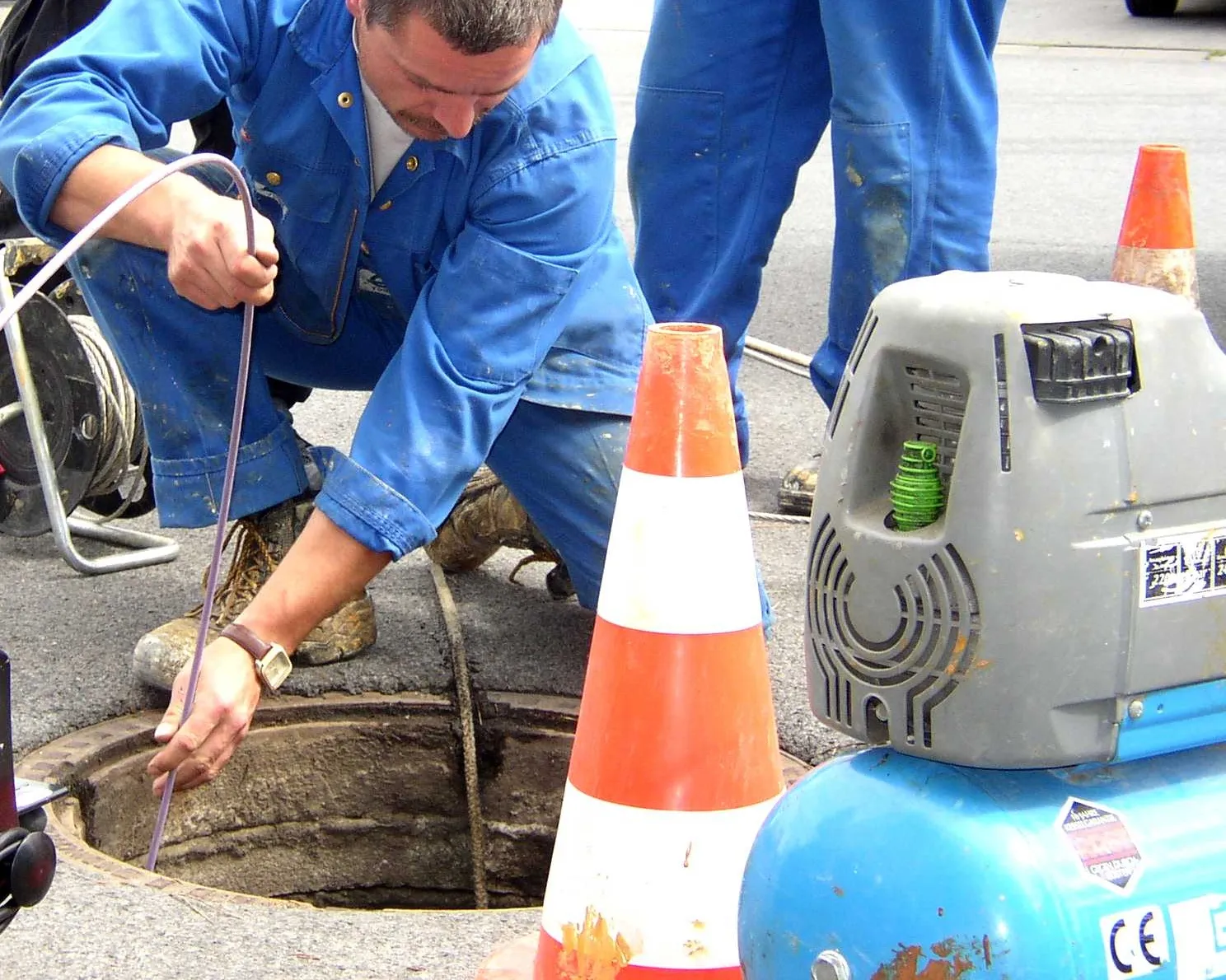
Our Services
-
Sewer Camera Inspections
A camera run through the line shows what's actually wrong, and where, before anyone talks about digging or dollars.
Learn more
-
Sewer Line Repair
Not every failing line needs full replacement. Localized damage can often be repaired where it sits.
Learn more
-
Trenchless Sewer Replacement
Failing lines can often be renewed through small access points instead of a full-length trench across the yard.
Learn more
-
Pipe Lining
A resin liner cured inside the existing pipe creates a new, jointless pipe within the old one.
Learn more
-
Pipe Bursting
A bursting head breaks apart the old pipe while pulling a brand-new one into its place: full replacement through small access pits.
Learn more
-
Traditional Sewer Replacement
Some lines can only be fixed the old way: open the ground, remove the failed pipe, and set a new one.
Learn more
-
Tree Root Intrusion
Roots find their way into aging lines through joints and cracks. Clearing them treats the symptom; the camera shows how bad the cause is.
Learn more
How a sewer project usually goes
- 1
Camera inspection
A camera travels the line and records what's wrong, where, and how bad.
- 2
Findings reviewed
You watch the footage and hear what it shows in plain words.
- 3
Options laid out
Repair, lining, bursting, or excavation — matched to the line's actual condition.
- 4
The work
The chosen fix gets done at the problem, not around it.
- 5
Verification
A final look confirms the line runs clear end to end.
Find out what's actually wrong before anyone talks methods or money
Why the method should follow the footage
Sewer lines fail in different ways, and each failure has a fix that fits it. A cracked section in an otherwise sound pipe can be repaired where it sits. A line that’s rough and leaking along its whole length may qualify for lining. A pipe too far gone to hold a liner might be burst and replaced through small pits. A collapsed line gets dug up. That’s the whole menu.
Good sewer work runs in one direction: the camera establishes the condition, and the condition picks the method. Run it the other way — pick the method, then justify it — and the homeowner pays for the mismatch. Either they buy a full replacement for a line that needed one repair, or they buy a patch on a pipe that’s failing everywhere and will be back open in two years.
Worcester makes the order of operations matter more, not less. A lateral serving a Vernon Hill three-decker might be a century old, laid in short clay sections with a joint every few feet. The same footage that finds one bad joint also shows whether the other thirty are going the same way. That difference — one bad joint versus thirty — is the difference between a spot repair and a trenchless renewal, and only the camera can see it.
Before any inspection, it helps to know what a camera inspection should show you: the full run of the line, findings you can watch, problems located by distance. Walk in knowing that, and no one can hand-wave you into a method.
What Worcester ground does to sewer lines
Worcester is a city of hills, and a city built early. Both show up on camera.
The three-decker neighborhoods — Main South, Vernon Hill, Grafton Hill, Quinsigamond Village — mostly date to the decades around 1900. Laterals from that era were typically vitrified clay, laid in short lengths with mortared joints. The clay itself holds up remarkably well. The joints don’t. Every joint is a seam that roots can find, and after a hundred years of frost and settling, many have shifted enough to snag paper and catch grease. The most common call from these streets is the clog that keeps coming back. The snake clears it; the offset joint that caused it stays.
The postwar neighborhoods tell a different story. Capes and ranches from the 1940s through the 1960s — Burncoat, parts of Tatnuck and the West Side — went in during the years when bituminous fiber pipe was a common budget choice. That material softens and deforms with age. On camera it shows as an egg-shaped pipe with blistered walls, and it’s a frequent reason a line that never clogged before suddenly won’t stay open.
Then there are the trees. Burncoat and Greendale lost more than 30,000 trees to the Asian longhorned beetle removals that started in 2008, so root pressure there is lighter than it once was. The older streets of the West Side kept their century maples and oaks — and those roots are still working on every clay joint within reach.
Add four feet of frost depth, glacial till studded with boulders, and laterals running steeply downhill to the street, and you get Worcester’s usual failure list: offset joints, root intrusion, bellies on the slopes, and mid-century pipe reaching the end of its material life.
Areas We Serve
- Worcester
- Shrewsbury
- Auburn
- Millbury
- Holden
- West Boylston
- Grafton
- Leicester
- Paxton
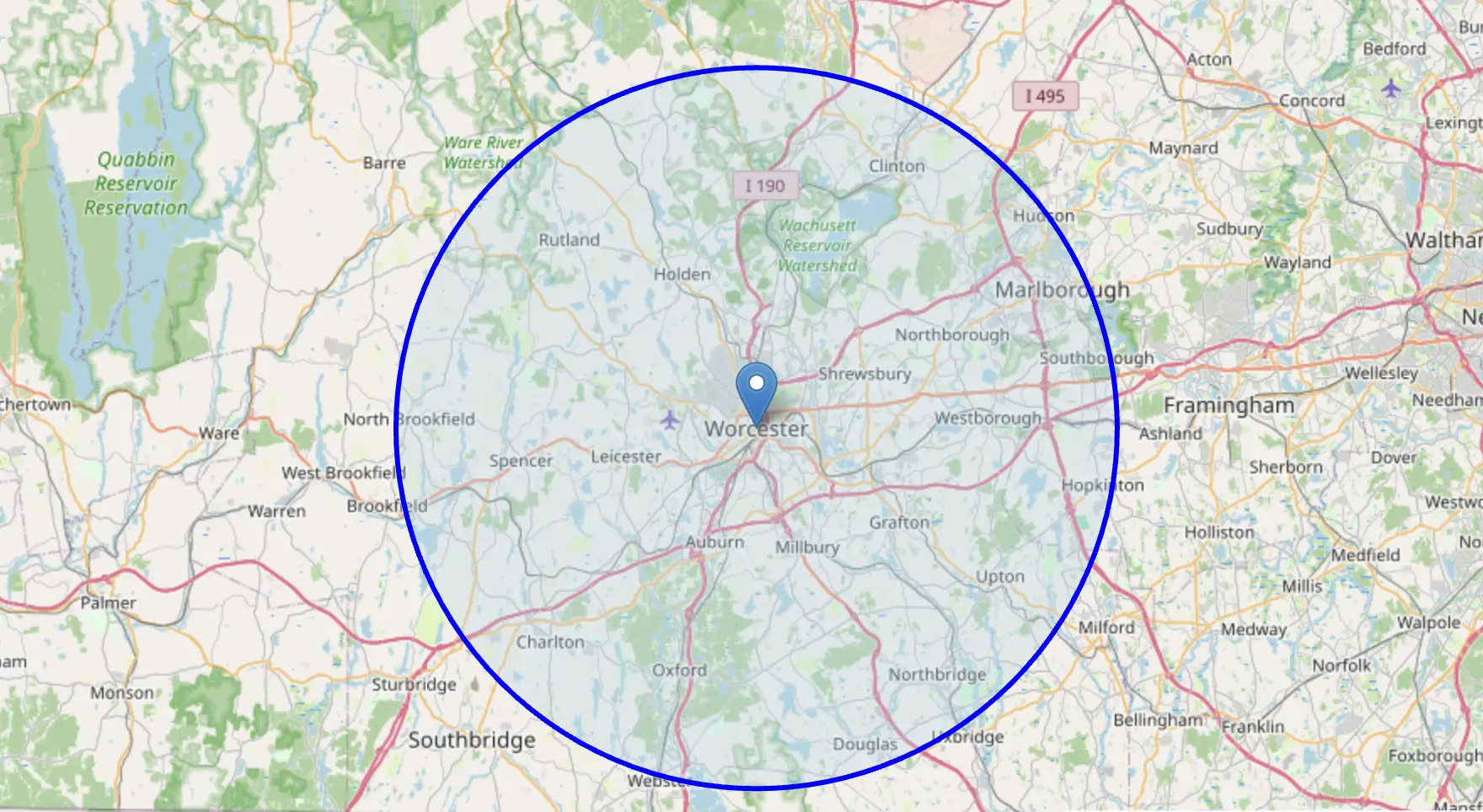
Find local details for each community on our service-area pages.
Frequently Asked Questions
How do I know if the problem is my sewer line or just a clogged drain?
A single slow fixture usually points to a local clog. When more than one drain backs up at once, or the lowest drain in the house gurgles or overflows while water runs elsewhere, the main line is the likely suspect. A camera inspection settles it by showing what is actually in the pipe.
Can a sewer line really be fixed without digging up the yard?
Often, yes. Trenchless methods like pipe lining and pipe bursting renew or replace a line through small access points instead of a full-length trench. Not every line qualifies. A camera inspection is how you find out whether yours does.
Should I get a second opinion on a big sewer replacement quote?
It is a reasonable step, and a common one. A legitimate diagnosis includes camera footage you can watch and problems that are located and named. If a quote came without those, a second camera run is a small cost next to a full replacement.
What happens during a sewer camera inspection?
A small waterproof camera goes into the line through a cleanout or other access point and travels its length. The operator watches the video feed, notes what the pipe is made of, and records where problems sit. The findings are then reviewed with you before any repair method is discussed.
Who is responsible for the sewer line under my yard?
In most places, responsibility splits somewhere along the line between the home and the city main. Where that split falls varies by city, so the local rule is worth checking before any work begins.
How much does sewer line replacement cost?
It depends on the length and depth of the line, how easy it is to reach, and which repair method fits. That is why a camera assessment comes first: it defines the actual scope, and the scope is what drives the number.